
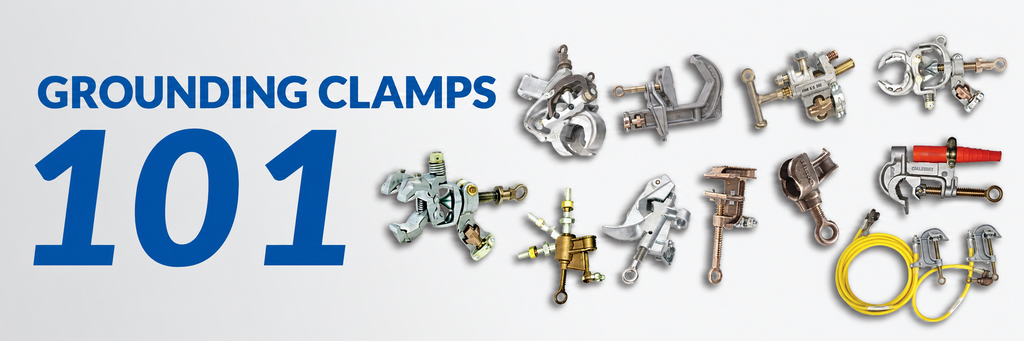
Temporary protective grounding is an important part of electrical safety when working on deenergized systems. Grounding assemblies provide a low impedance path for fault current and help protect workers from hazards such as induced voltage, backfeed, lightning, switching errors, and accidental re-energization.
A typical grounding assembly consists of grounding cable, ferrules, and clamps, and each component must be properly matched to the application and required fault-current capacity. If one component is not properly matched to the others, the lower-rated component will limit the current capacity of the entire grounding assembly. For example, if the cable and ferrules are rated for 400 amps but the clamp is rated for only 250 amps, the entire assembly is limited to 250 amps. In this example, while the cable and ferrules may have a higher capacity, the lower rated clamp becomes the limiting factor for the complete assembly. The clamp’s electrical and mechanical ratings, conductor range, and connection method must also be appropriate for the grounding assembly.
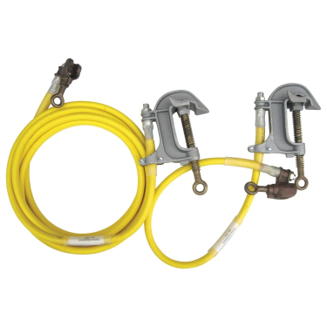
For simplicity’s sake, we won’t get too into the electrical ratings of each and every clamp that exists, but know that most clamps come in a variety of sizes and ratings for different applications. The important thing is to make sure the clamp you choose is properly rated for the job and is compatible with the rest of the grounding assembly.
C-Clamps
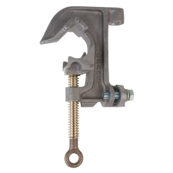
C-clamps are one of the most common styles of temporary grounding clamp. Their C-shaped body allows the clamp to wrap around a conductor or bus, while a threaded eyescrew is used to tighten the jaw and establish a secure electrical connection. C-type clamps are typically used on round bus or stranded conductors. They are available in different sizes, jaw configurations, materials, and ratings to accommodate different conductor and grounding-cable sizes. Some feature smooth jaws while others use serrated jaws for particular applications.
Flat-Jaw/Flat-Face Clamps
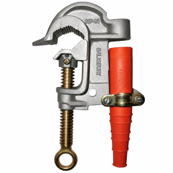
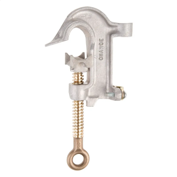
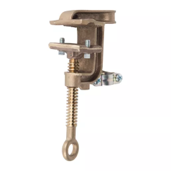
Flat-jaw clamps are designed for making connections to flat surfaces, such as equipment or grounding pads. They are available in aluminum or bronze and with either an eye or T-handle configuration, with the eye configuration being for hotstick installation and the T-handle being for hand turning installation.
Duckbill/Snap-On Clamps
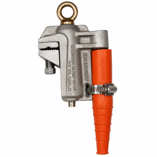
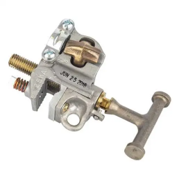
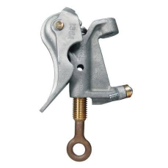
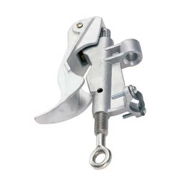
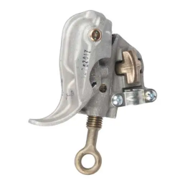
Duckbill clamps feature an elongated jaw design that can provide access to grounding points where a traditional clamp may be difficult to position. They are available in different configurations to accommodate specific applications.
Apparatus/Ball-and-Socket Clamps
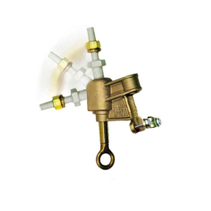
Apparatus clamps are part of a ball-and-socket grounding system and are designed to provide variable angle access. This makes them useful when working with grounding points where positioning a traditional clamp may be difficult.
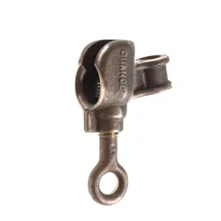
Bus-Bar Grounding Clamps
Bus-bar grounding clamps are designed specifically for connecting temporary grounding cables to bus bars and other large, rigid conductors. Their larger jaw openings and specialized designs provide a secure connection to the typically flat or substantial surfaces found in substations and switchyards. Like other grounding clamps, they are available in different sizes and ratings to accommodate different applications and conductor dimensions.
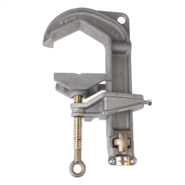
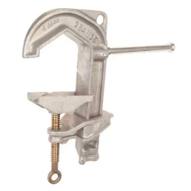
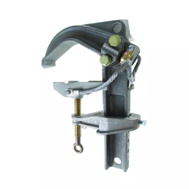
All-Angle Clamps
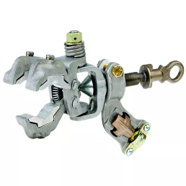
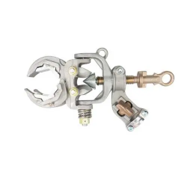
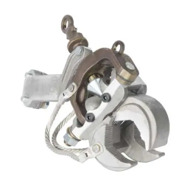
All-Angle grounding clamps are designed to provide greater flexibility when making a connection to a conductor. Unlike a standard C type clamp, the jaws can pivot to accommodate different approach angles, making them useful when the grounding cable cannot approach the conductor from a straight on position. All-Angle clamps, for example, allow the jaws to pivot 75° to either side, helping make installation easier in a variety of situations.
Underground distribution: Beyond Clamps
While clamps are an important part of temporary grounding, they aren’t the only grounding equipment used in electrical distribution. Underground distribution systems, in particular, use a variety of specialized components designed to connect grounding equipment to underground cables and equipment. These can include deadbreak elbows, loadbreak elbows, grounding bushings, and standoff or parking bushings, among other specialized accessories.
These components serve different purposes and are designed to work with specific underground distribution equipment and interfaces. For example, there are grounding sets that use loadbreak bushings along with grounding cable and a clamp, while standoff bushings provide a designated interface for parking and supporting separable connectors.
There is a lot more to explore when it comes to underground distribution and grounding, but that’s a topic for another time. For now, we’ll leave it there and keep our focus on the most common types of grounding clamps and the different types used in temporary protective grounding.
Need help selecting the right grounding equipment? Contact our team and we’ll be happy to help!