
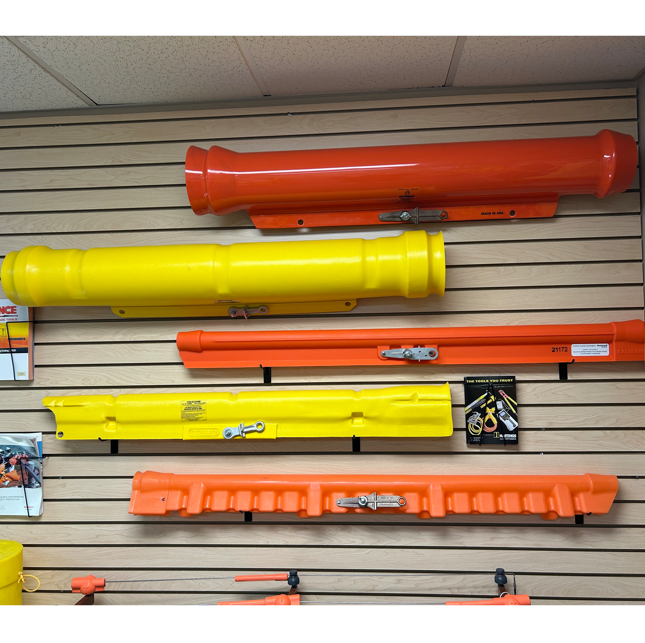
Rigid plastic line guards and conductor covers provide essential physical and dielectric protection for line workers operating near energized overhead lines, pole-top transformers, and structural crossarms. Made from durable thermoplastic materials, these guards must withstand harsh weather, mechanical impacts, and UV exposure. Over time, unseen hairline fractures, deep stress crazing, or electrical surface tracking can compromise their insulation value.
Burlington Safety Laboratory offers complete, ASTM-compliant dielectric testing and visual inspection for rigid plastic line guards and covers across our regional laboratories in New Jersey and California. With our standard 2-week turnaround time (and expedited services available), we ensure your hard cover-up protection remains electrically safe and fully compliant.
Why Choose Burlington Safety Lab for Plastic Line Guard Testing?
- NAIL for PET Accredited: Certified independent laboratory testing since 1971.
- Full ASTM / OSHA Compliance: Tested strictly to ASTM F712 industry standards.
- Seamless Replacement Program: New product inventory ready to replace failed line guards immediately.
- Complete Traceability: Detailed test documentation, ink date stamping, and serialized record-keeping provided with every order.
High Voltage Line Guard Compliance & Testing Specifications
In compliance with OSHA 1910.269 and ASTM F712 standards, rigid plastic line guards and conductor covers must undergo regular dielectric laboratory testing and visual inspection every 12 months (or whenever visual inspection reveals surface tracking, cracks, or mechanical damage).
Spec Feature | Standard Specification Details |
|---|---|
Applicable Standards | ASTM F712 (In-Service Dielectric Testing of Plastic Guarding Equipment) |
Equipment Tested | Conductor guards, insulator covers, crossarm guards, pole guards, and cutout covers |
Required Test Frequency | Every 12 months (In-Service) / Annual re-certification & daily pre-use check |
Accreditation | NAIL for PET (North American Independent Laboratories for Protective Equipment Testing) |
Turnaround Time | Standard 2-Week Turnaround (Expedited Services Available) |
Our Step-by-Step Dielectric Testing Process for High Voltage Line Guards
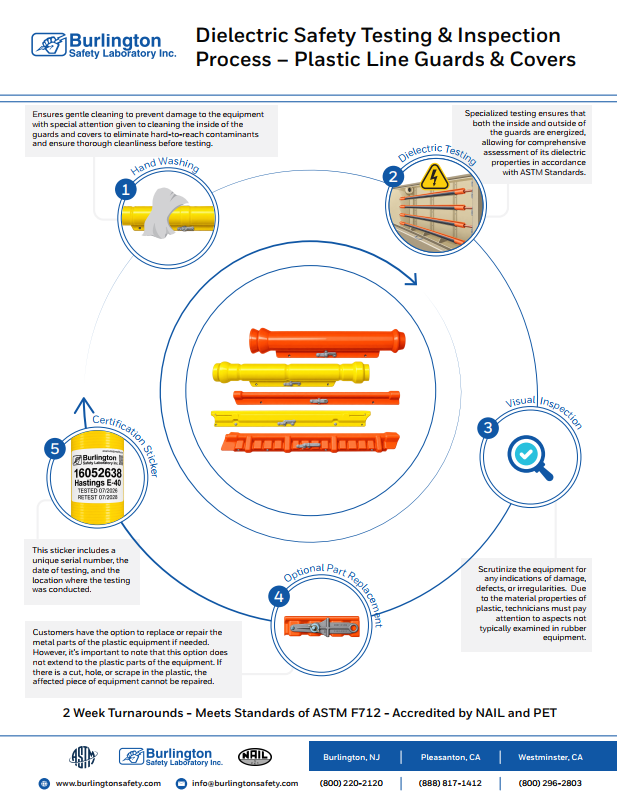
Every rigid plastic line guard and cover submitted to Burlington Safety Laboratory undergoes a thorough multi-stage electrical and physical quality inspection:
Step 1: Preparatory Cleaning & Decontamination
Line guards are cleaned using approved solvent-free detergents to remove road film, grease, mud, tree sap, and metallic dust buildup. Cleaning is essential to eliminate conductive paths across the thermoplastic surface prior to high-voltage testing.
Step 2: Surface Drying
Following washing, guards pass through warm-air drying units to completely dry inner channels, mounting lips, and attachment sockets.
Step 3: High-Voltage Dielectric Testing
Guards are mounted on specialized electrode test fixtures and subjected to high-voltage AC dielectric proof testing in accordance with ASTM F712 standards. Precision instruments monitor current leakage across the surface and body of the plastic guard. Any guard exhibiting electrical breakdown, flashover, or excessive leakage current is flagged immediately.
Step 4: Re-Drying Process
After completing high-voltage testing, guards undergo a secondary drying pass to prepare the rigid surface for detailed physical evaluation.
Step 5: Visual Inspection & Structural Integrity Check
Skilled technicians inspect every plastic guard inside and out under bright lighting. Technicians verify mechanical latches, eyelets, and hinges while inspecting for:
- Structural cracks, stress crazing, gouges, or deep scratches
- Carbon tracking, electrical burning, or UV embrittlement
- Broken or missing hot-stick attachment pins, handles, or interlocking lips
Step 6: Serialized Stamping & Marking
Guards passing both electrical and physical inspections are stamped or tagged with durable serialization detailing the unique tracking serial number, test voltage, and test completion date for complete audit traceability.
Step 7: Protective Packaging
Certified plastic line guards are stacked or wrapped in protective sleeving to guard against surface scuffing and mechanical damage during handling.
Step 8: Boxing & Labeling
Guards are placed in heavy-duty shipping containers or crates, sealed with Burlington Safety tape, and tagged with detailed box labels displaying serial numbers and test dates.
Step 9: Shipping or Pickup
Completed shipments are dispatched via UPS or made available for customer pickup at one of our regional lab locations (Burlington, NJ; Pleasanton, CA; Westminster, CA).
Plastic Line Guard Field Care & Inspection (In the Field Guidelines)
Proper field maintenance protects the dielectric surface of rigid plastic line guards between required 12-month laboratory retests:
ALWAYS:
NEVER:
Immediate Replacement for Failed Plastic Guards
If a rigid plastic line guard fails dielectric proof testing or displays structural cracking, it cannot be safely repaired or returned to service.
Burlington Safety Laboratory carries a complete inventory of new ASTM F712 certified plastic line guards, conductor covers, and crossarm shields from leading safety equipment manufacturers. We can immediately ship replacement units directly from stock to keep your utility operations safe and on schedule.
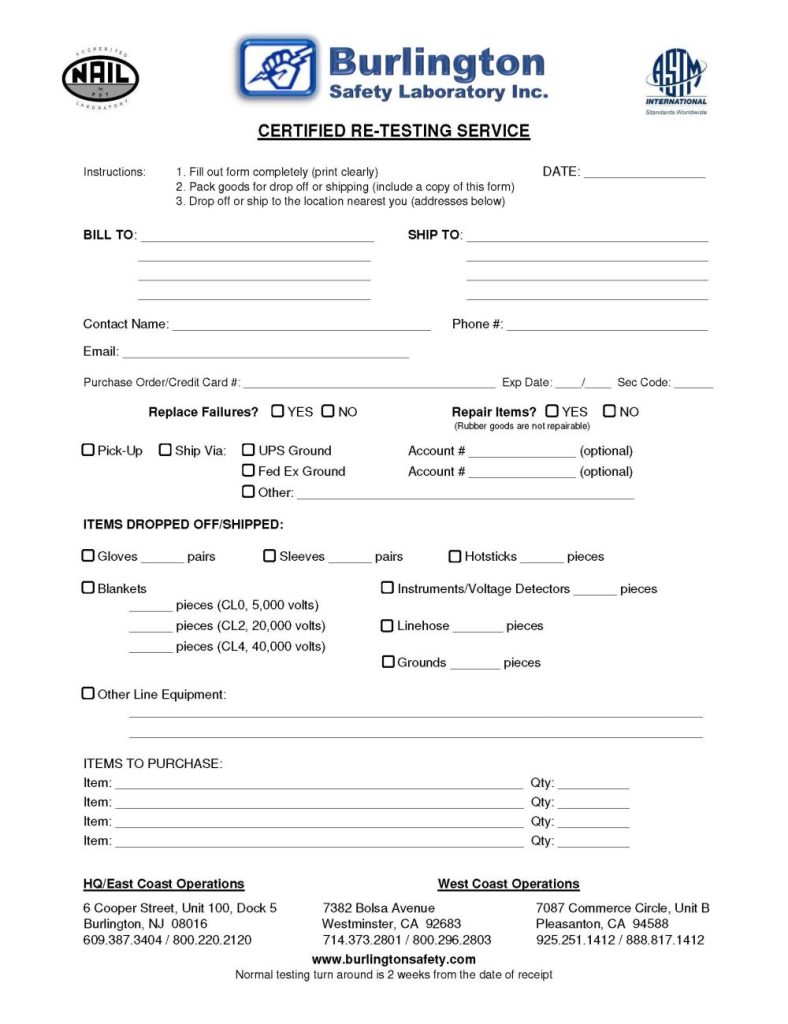
Ready to Recertify Your Plastic Line Guards?
Ensure your utility workers stay protected against accidental re-energization with certified electrical testing.