
Insulating rubber hoods and covers are critical protective components used alongside line hoses to provide continuous dielectric isolation across pole-top apparatus, insulators, crossarms, and cutout switches. Because hoods are repeatedly installed using hot sticks and positioned near sharp hardware under severe weather conditions, surface tracking, tears, or stress cracks can expose line crews to severe shock hazards.
Burlington Safety Laboratory offers complete, ASTM-compliant dielectric testing and inspection services for all types of rubber insulating hoods across our laboratory facilities in New Jersey and California. With our standard 2-week turnaround time (and expedited options available), we ensure your specialized cover-up gear provides uncompromised electrical protection.
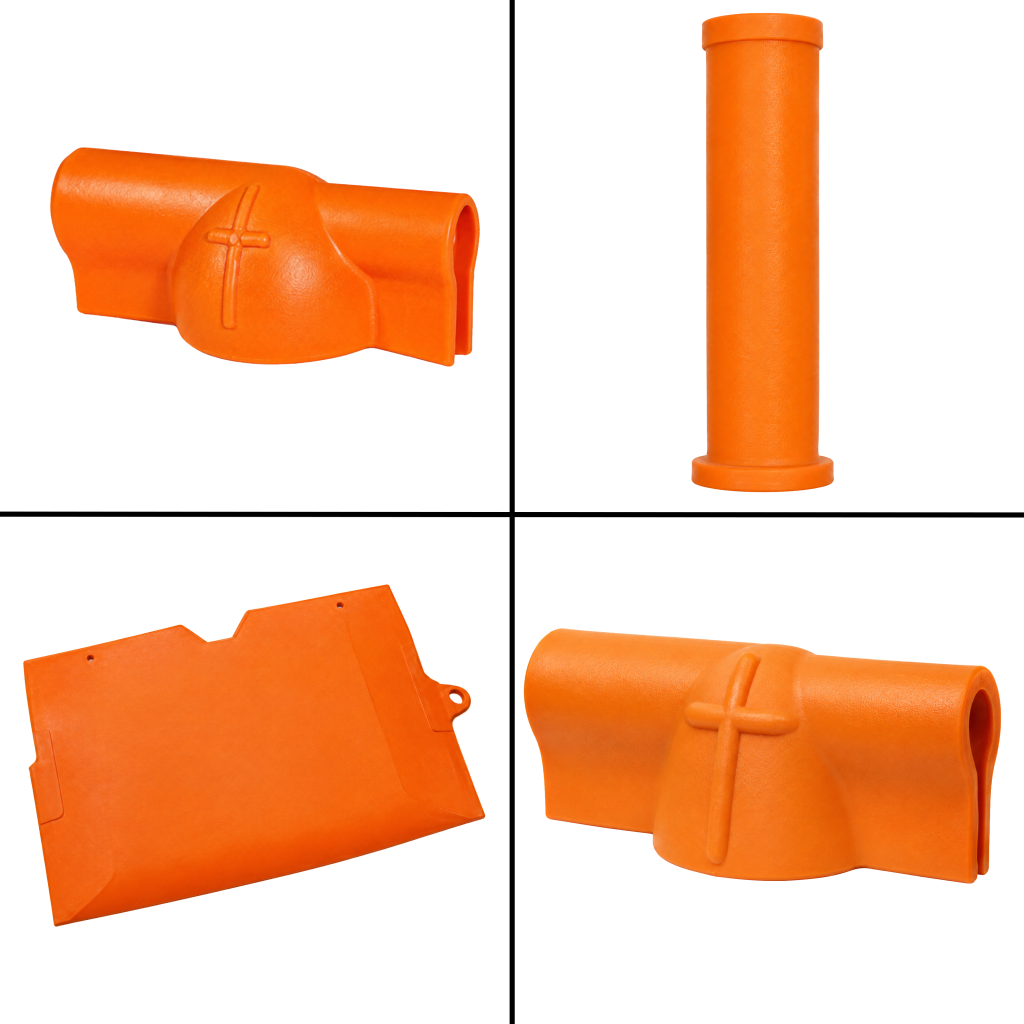
Why Choose Burlington Safety Lab for Rubber Hood Testing?
- NAIL for PET Accredited: Certified independent laboratory testing since 1971.
- Full ASTM / OSHA Compliance: Tested strictly to ASTM D1049 and F478 standards.
- Seamless Replacement Program: New product inventory ready to replace failed hoods immediately.
- Complete Traceability: Detailed test documentation, ink date stamping, and serialized record-keeping provided with every order.
Rubber Hood Compliance & Testing Specifications
In compliance with OSHA 1910.137 and NFPA 70E, rubber insulating hoods and covers must undergo dielectric laboratory retesting every 12 months (or sooner if daily pre-use inspection reveals physical degradation).
Spec Feature | Standard Specification Details |
|---|---|
Applicable Standards | ASTM D1049 (Manufacturing) & ASTM F478 (In-Service Care/Testing) |
Hood Classes Tested | Pin hoods, deadend covers, insulator covers, cutout covers, and crossarm guards |
Required Test Frequency | Every 12 months (In-Service) / 12 months (Unissued/Stored) |
Accreditation | NAIL for PET (North American Independent Laboratories for Protective Equipment Testing) |
Turnaround Time | Standard 2-Week Turnaround (Expedited Services Available) |
Our Step-by-Step Dielectric Testing Process for Insulating Hoods
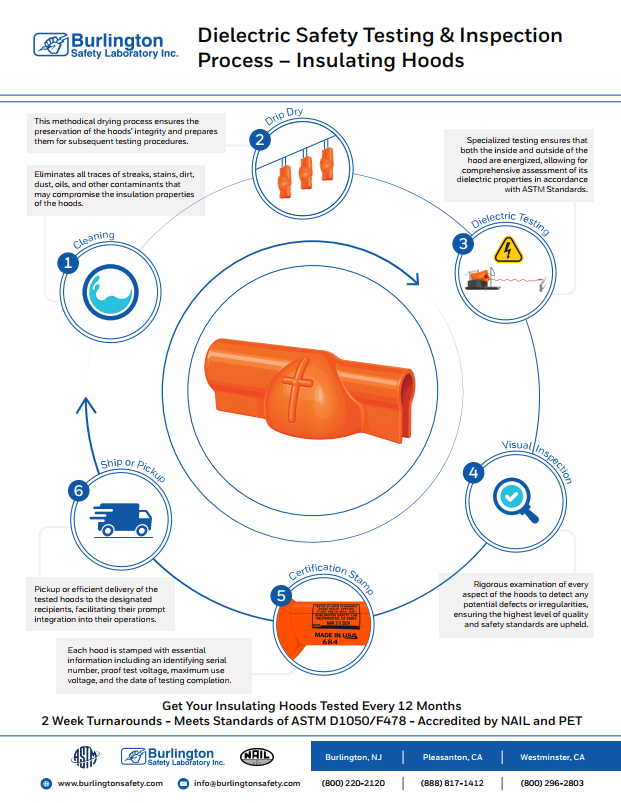
Every insulating rubber hood submitted to Burlington Safety Laboratory undergoes a thorough 9-step quality assurance workflow:
Step 1: Preparatory Cleaning & Washing
Hoods undergo thorough cleaning using environmentally safe detergents to remove dirt, mud, line grease, tree sap, and foreign contaminants that compromise dielectric insulation. Previous certification stamps are stripped off during this wash phase.
Step 2: Machine Drying
Following cleaning, hoods are placed in warm-air drying units to completely dry inner contours and deep crevices prior to high-voltage electrical testing.
Step 3: Dielectric High-Voltage Testing
Utilizing specialized high-voltage test tanks, hoods are submerged or filled in strict accordance with ASTM standards. Automated testing machines apply the required proof voltage based on the class rating while evaluating dielectric strength and leakage current. Any hood exhibiting voltage breakdown or excessive leakage is automatically flagged.
Step 4: Re-Drying Process
After water-bath electrical testing, hoods pass through a second drying cycle to prepare the rubber surface for physical inspection.
Step 5: Visual Inspection & Physical Evaluation
Experienced technicians perform a meticulous visual inspection inside and out under high-intensity lighting. Technicians flex and inspect structural seams, lip lock channels, and hot-stick attachment points for defects including:
- Ozone cracking, UV deterioration, and corona cutting
- Pinholes, tears, deep gouges, cuts, and abrasions
- Hard spots, soft spots, deformation, or embedded conductive material
Step 6: Serialized Stamping
Hoods passing both dielectric and visual inspection are stamped in durable ink with a unique tracking serial number, test date, proof-test voltage, and maximum use voltage rating.
Step 7: Protective Packaging
Certified hoods are individually bagged or wrapped to guard against dust, moisture, and surface scuffing during handling.
Step 8: Boxing & Labeling
Hoods are packed into sturdy cartons, sealed with Burlington Safety tape, and affixed with serialized tracking labels for clear inventory audit compliance.
Step 9: Shipping or Pickup
Completed shipments are dispatched via UPS or made available for customer pickup at one of our regional lab locations (Burlington, NJ; Pleasanton, CA; Westminster, CA).
Rubber Hood Field Care & Inspection (In the Field Guidelines)
Proper care extends the service life of rubber insulating hoods and ensures worker safety between required annual lab retests:
ALWAYS:
NEVER:
Immediate Replacement for Failed Hoods
If an insulating hood fails dielectric voltage testing or physical air/visual inspection, safety regulations prohibit its return to field service.
Burlington Safety Laboratory maintains a comprehensive inventory of new, freshly tested Class 1 through Class 4 rubber insulating hoods and covers from top manufacturers. We can immediately fulfill replacement orders directly from stock to keep your utility operations running without delay.
Ready to Recertify Your Rubber Hoods?
Ensure your utility workers stay protected against accidental re-energization with certified electrical testing.